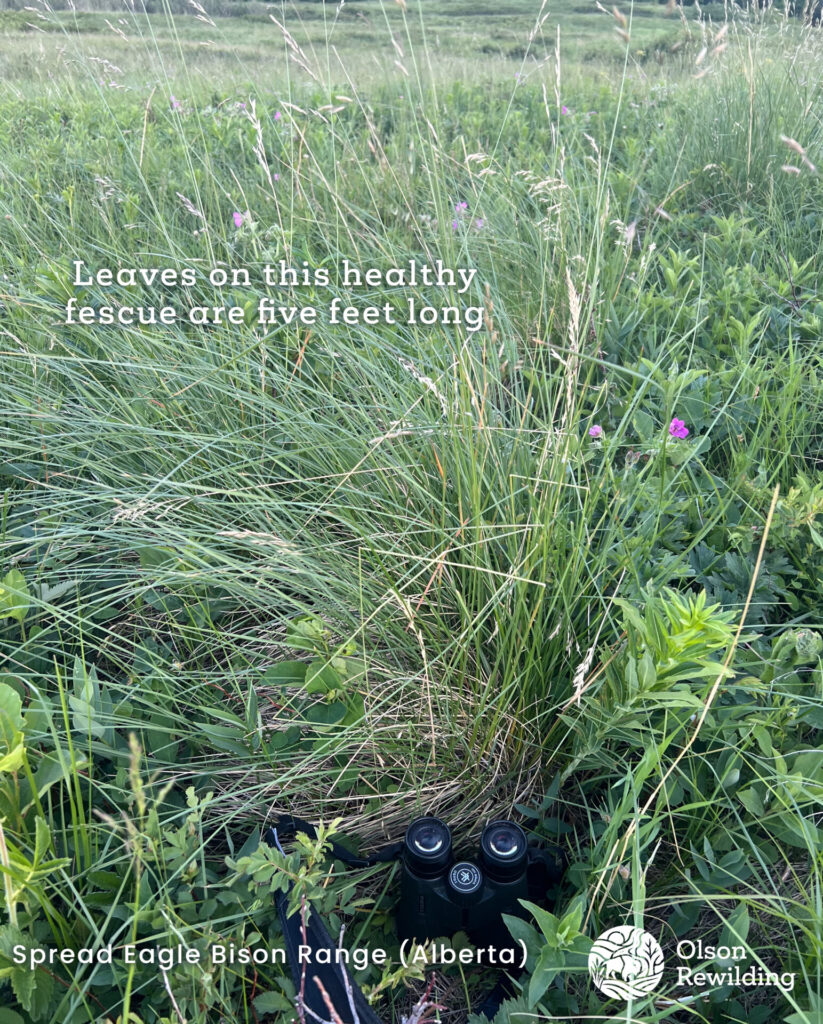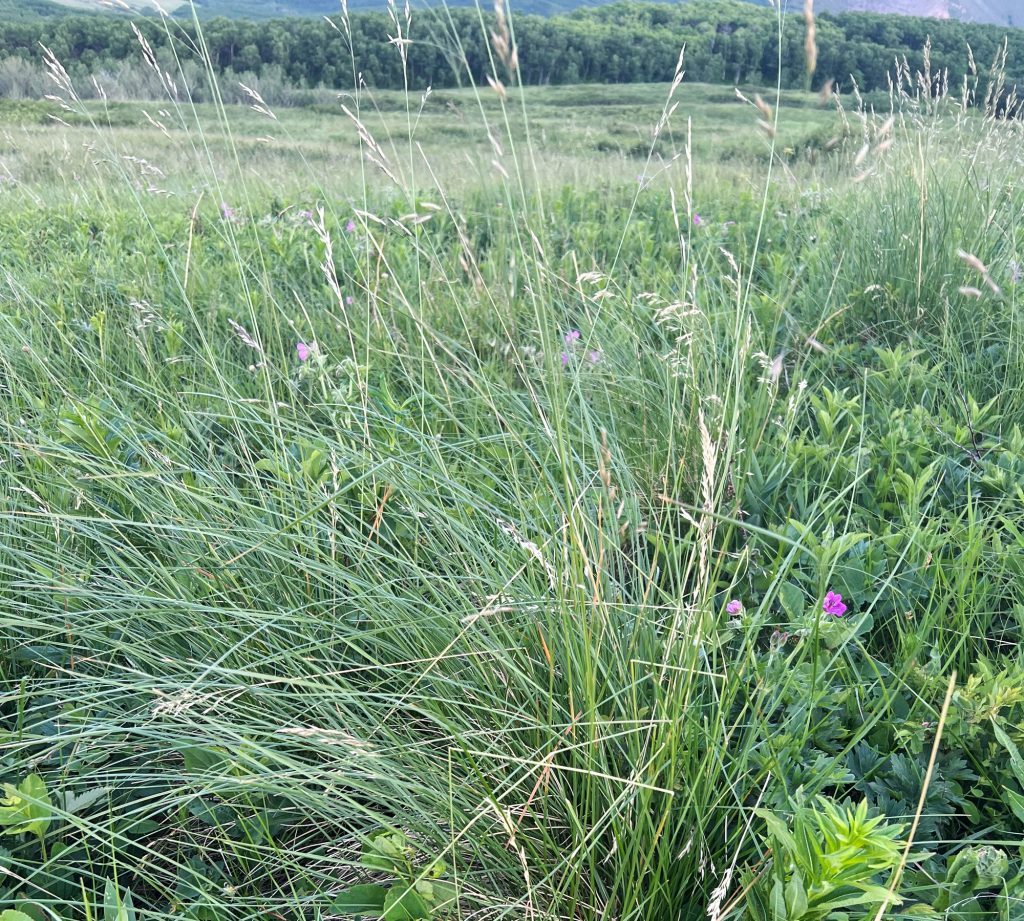
Olson Rewilding has witnessed bison restoring rough fescue, critical winter feed for elk.
Fescue is a tall densely tufted bunchgrass that stays erect in the snow, making it easier for elk to find and graze. It cures on the stem and has a waxy coated leaves to retain water soluble nutrients. When fescue increases in volume and availability, critical winter range for elk allows for increased healthy elk populations.
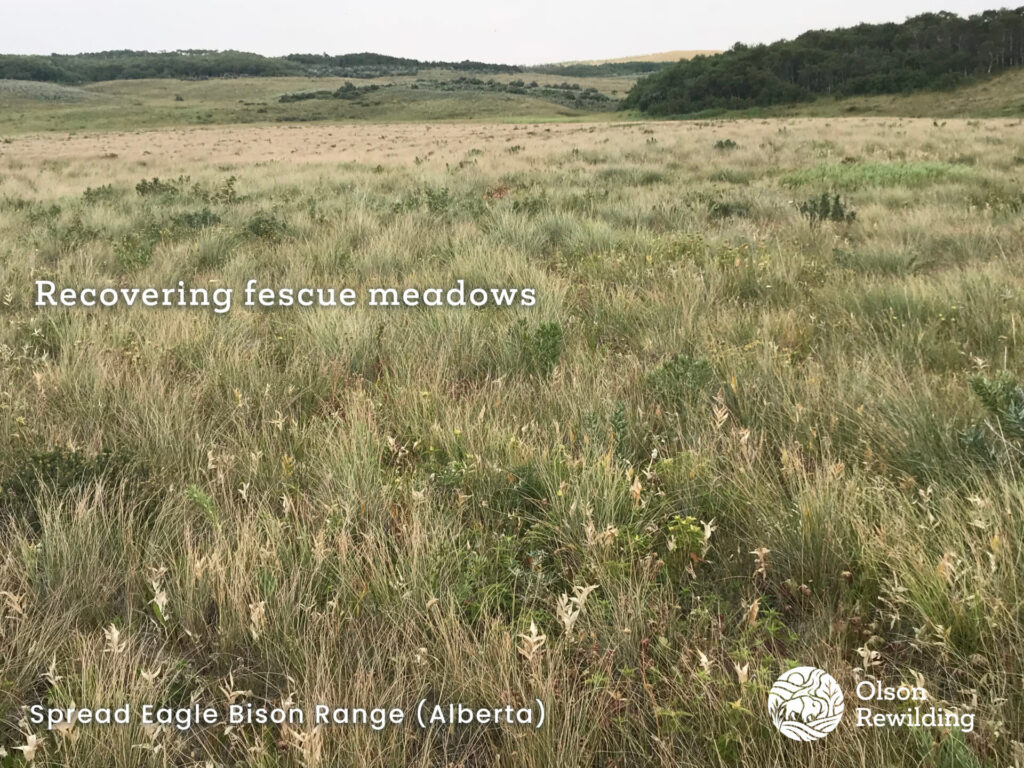
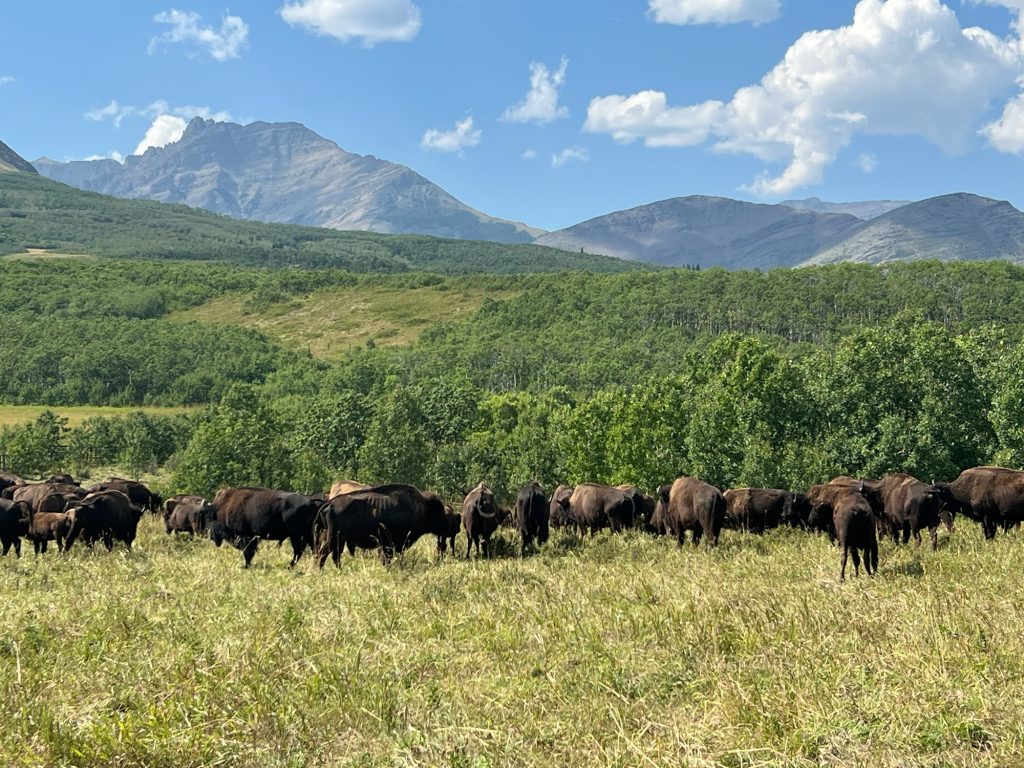
Bison restore fescue meadows by grazing fescue in winter, which is how they co-evolved. Bison create the perturbation dynamic at the right time for healthy resilient fescue range. When fescue leaves photosynthesize for the entire growing season, fescue develops extensive and deep roots allowing it to put up more robust leaves and seeds the next year and to thrive even in extended droughts.
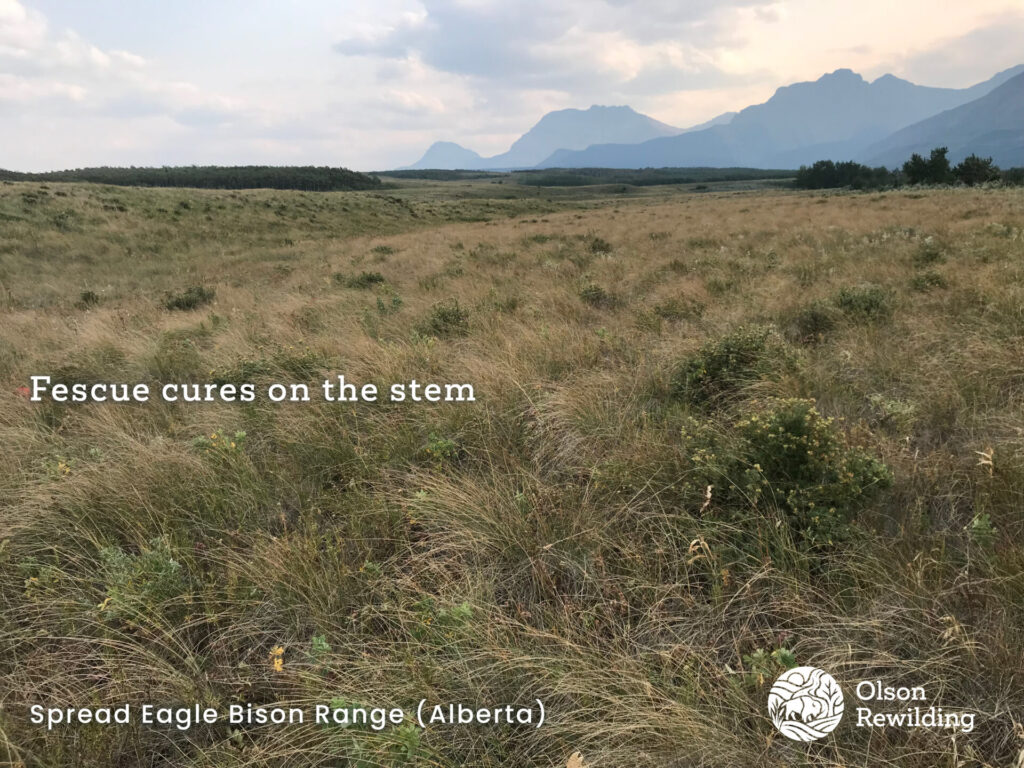
Bison can graze fescue in the winter because they can thrust their big shaggy heads into a snow drift to find the fescue they know is standing underneath. Bison thrive on the 6% protein in the senesced fescue. Domestic livestock can do neither. Therefore, livestock must graze fescue in the growing season or not at all. When clipped during the growing season, the fescue cannot support the extensive roots. The roots shrink and the range becomes degraded over time. It can no longer compete with invasive plants.
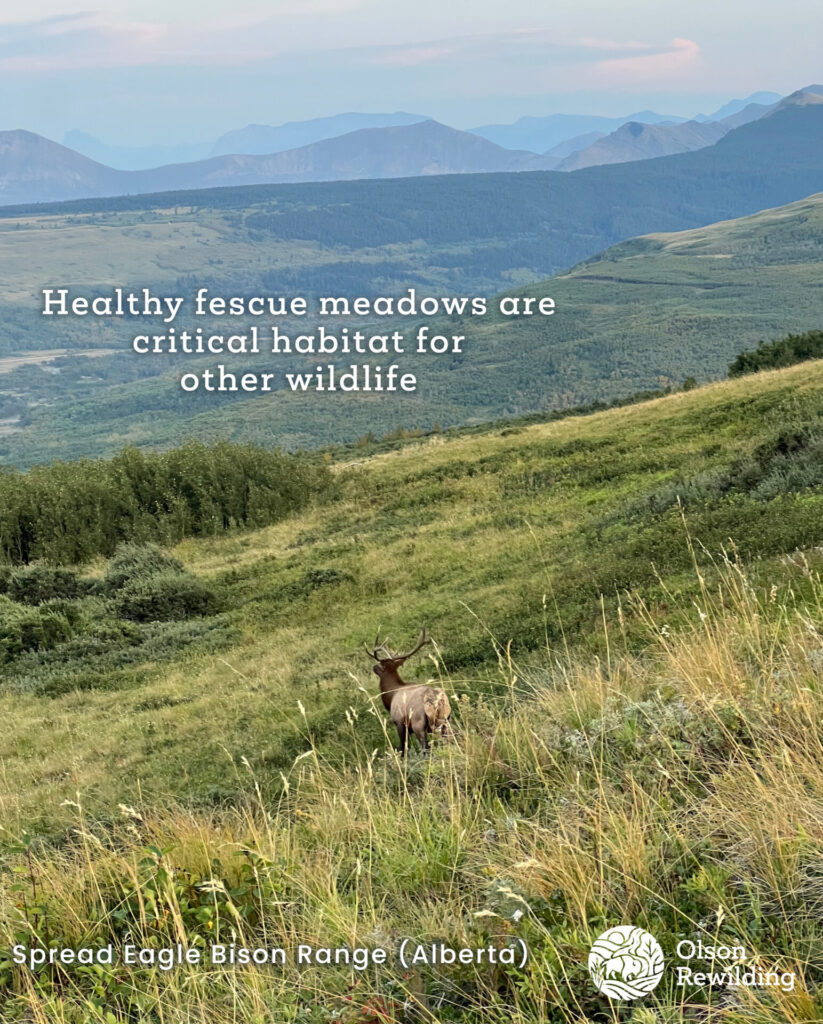
If the fescue is not grazed at all, as is the case in some National Parks, it becomes wolfy and moribund. Bison plow through the snow, even on the highest alpine meadow Olson Rewilding’s Spread Eagle Mountain bison range, which ensures that all the fescue is grazed at least periodically.
Restored fescue meadows increases elk winter habitat.